Auburn
A campaign with no camera, no location and no crew
A four-act Instagram series and the storyboards behind it, generated end to end.
The brief
A vehicle wrap brand needed always-on social content at a cadence no shoot schedule could sustain, plus boards for the films that follow. Every new wrap design would otherwise mean another shoot, another location and another crew.
Our approach
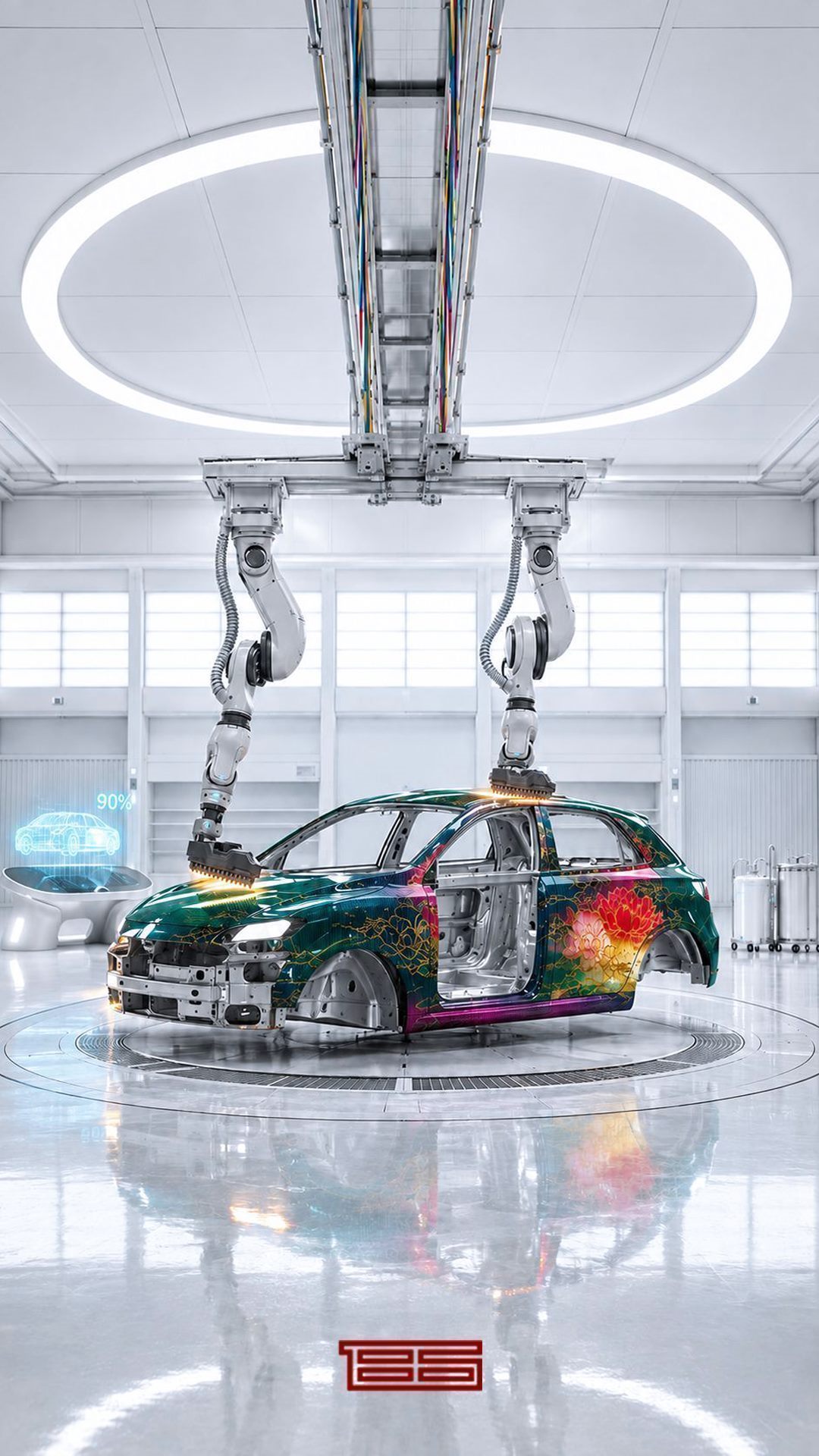
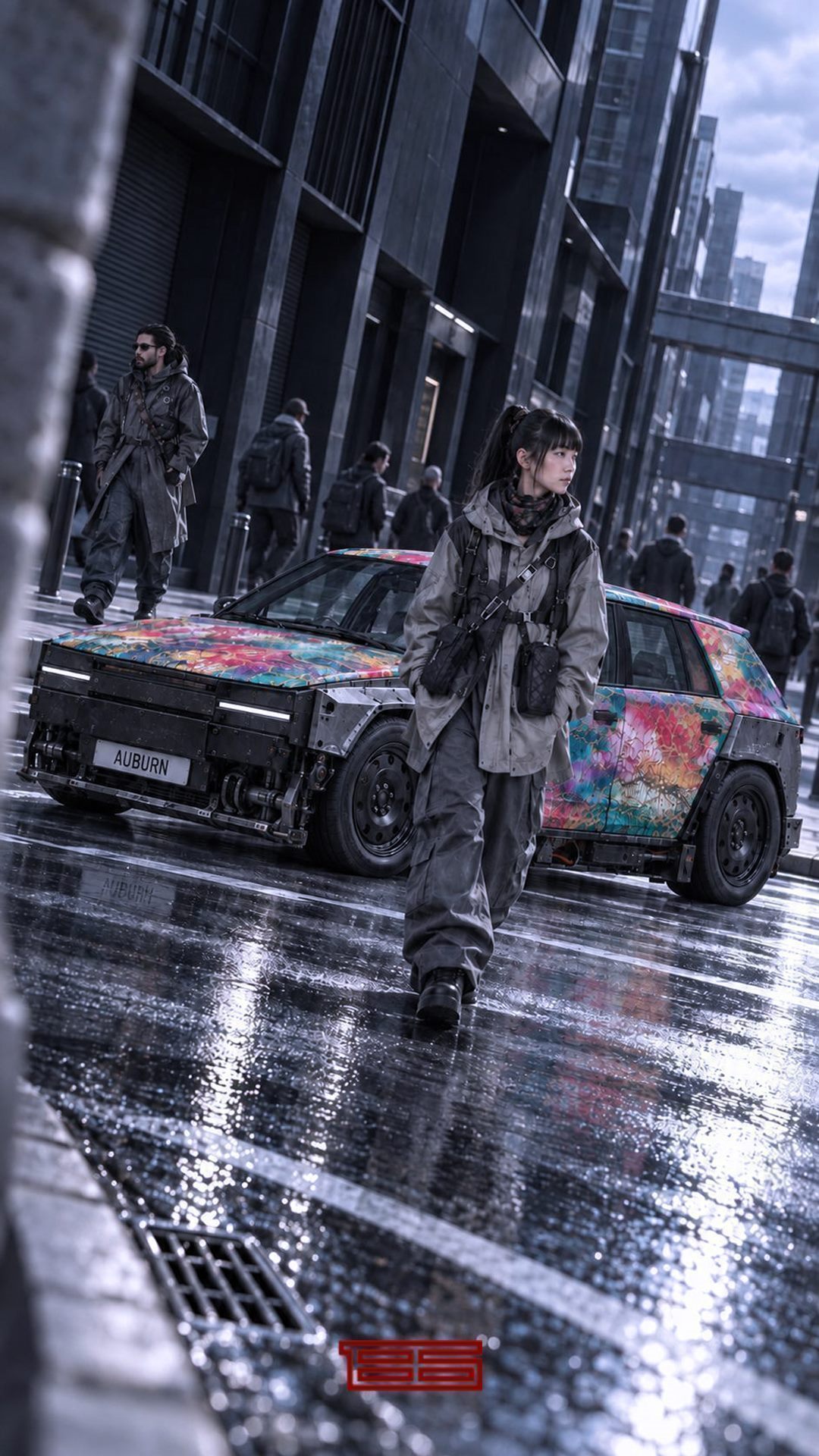
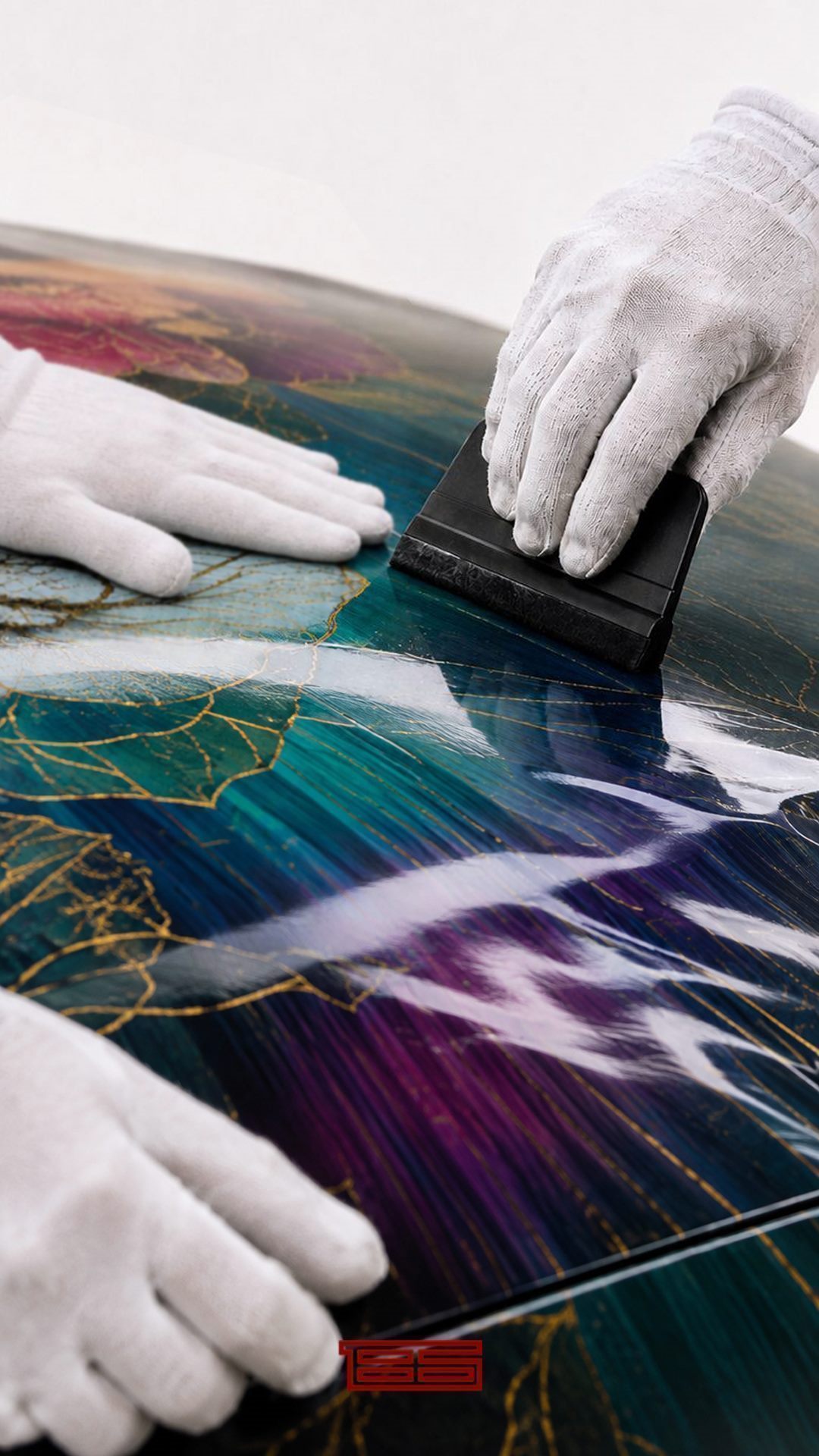
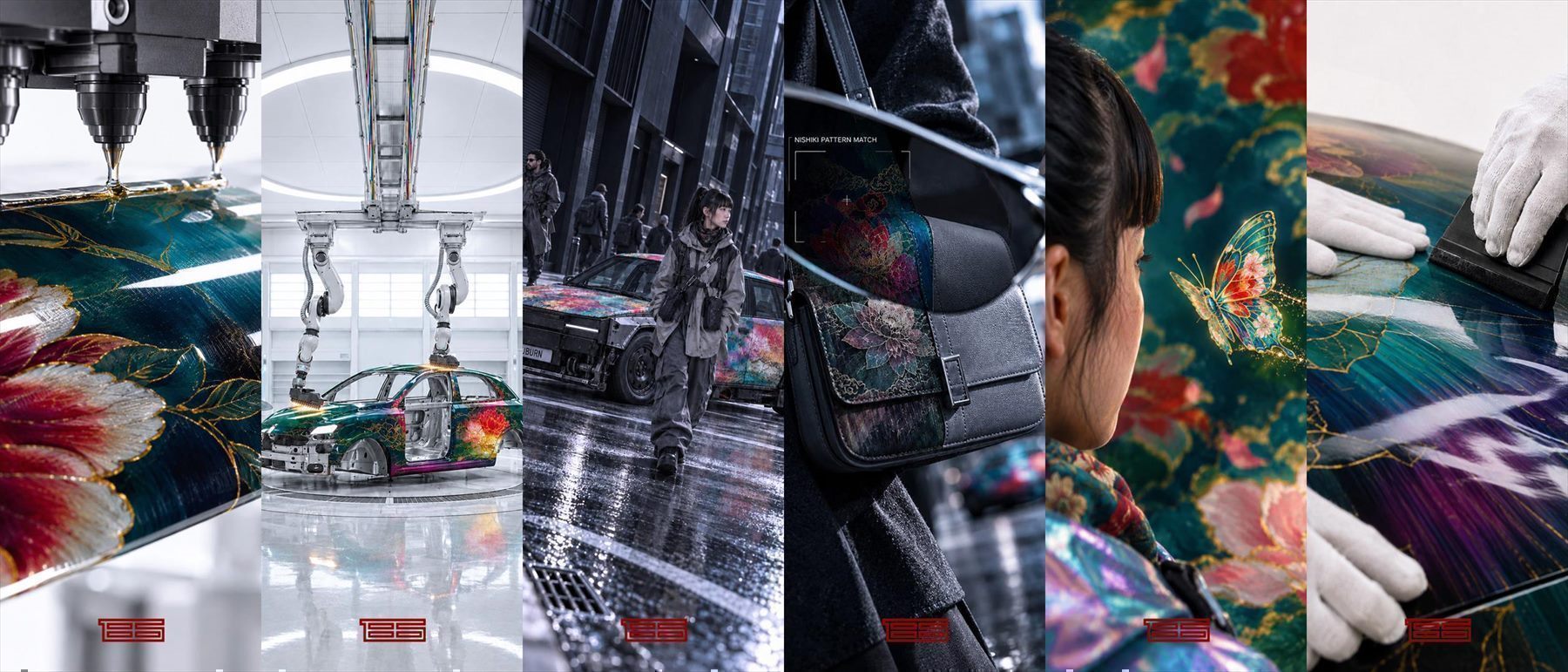
We built the campaign in our own AI production pipeline. Nothing is generated as a single shot: backgrounds, characters and the vehicle are each built as separate reusable elements and then composited, which is what keeps the same cast and the same car recognisable across twenty-four frames and four acts. The wrap is then treated as something alive rather than a product finish — applied by machine, worn through a city, spreading past the car onto the people around it, and finally becoming the landscape it was drawn from. A fifth act cuts back to gloved hands, vinyl and a blade, so the work stays honest about what the client actually sells.
Outcome
- 01Consistent cast and vehicle across twenty-four frames, from reusable elements
- 02Four acts of vertical social content, delivered as a monthly cadence
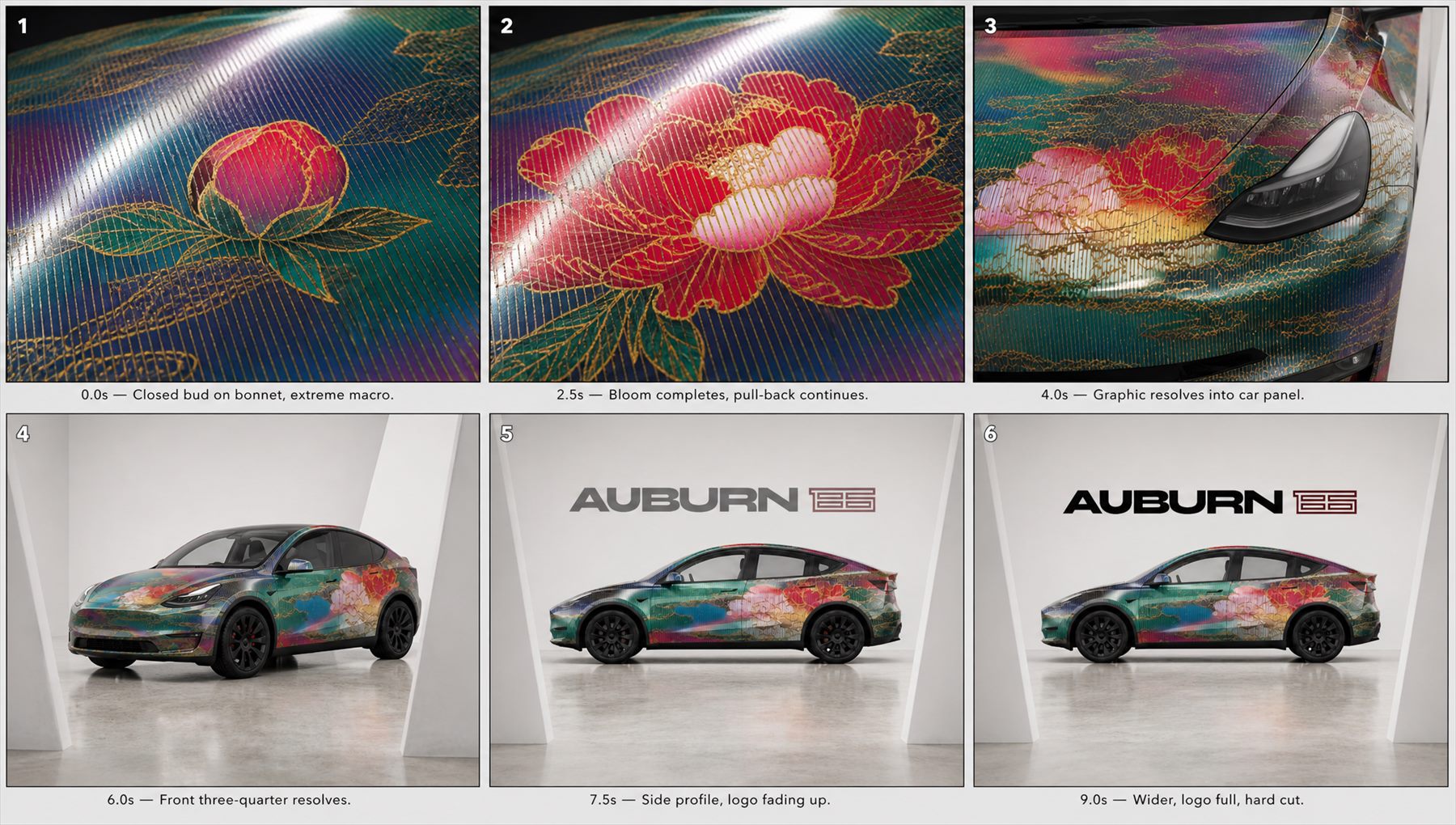
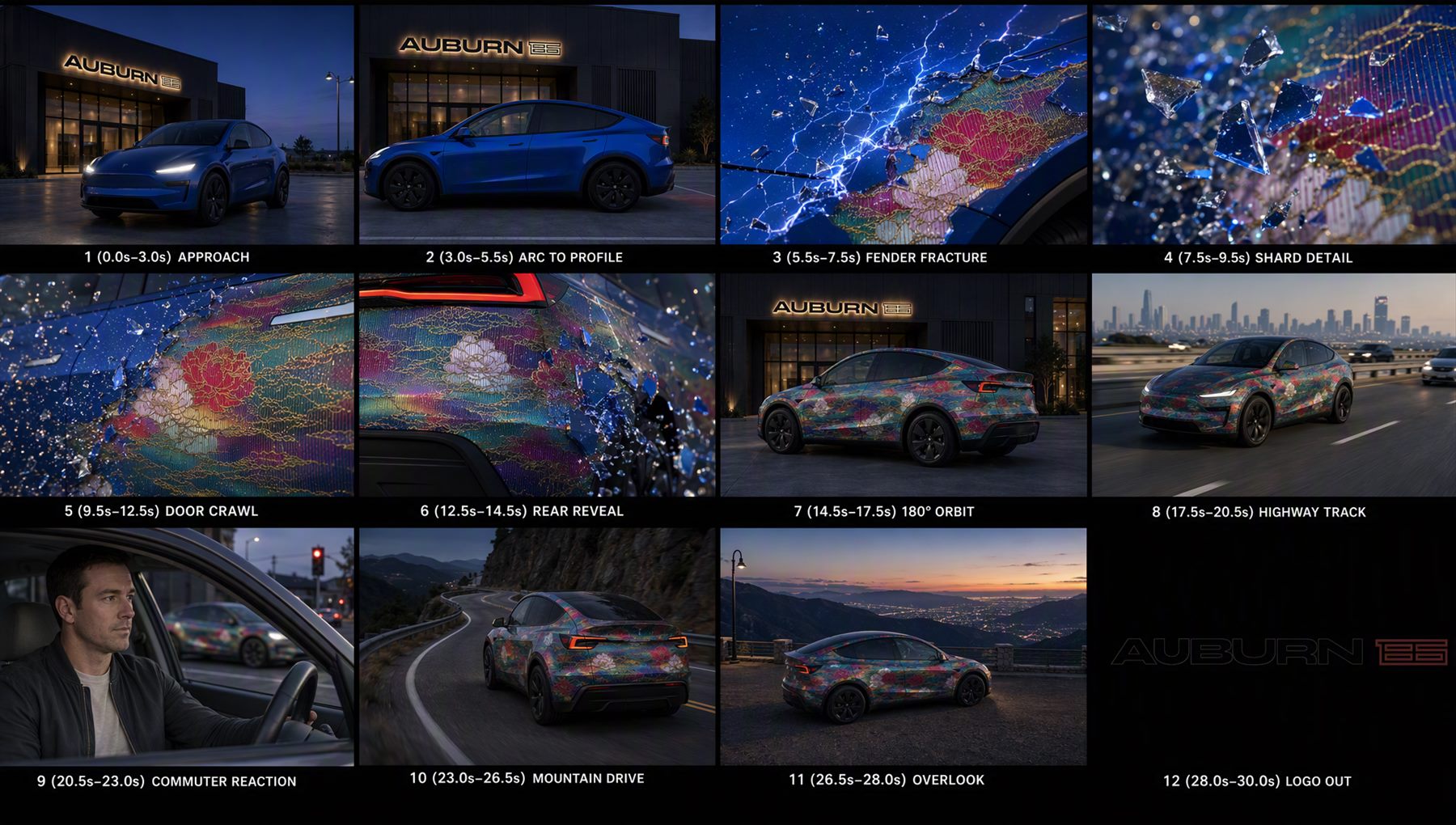
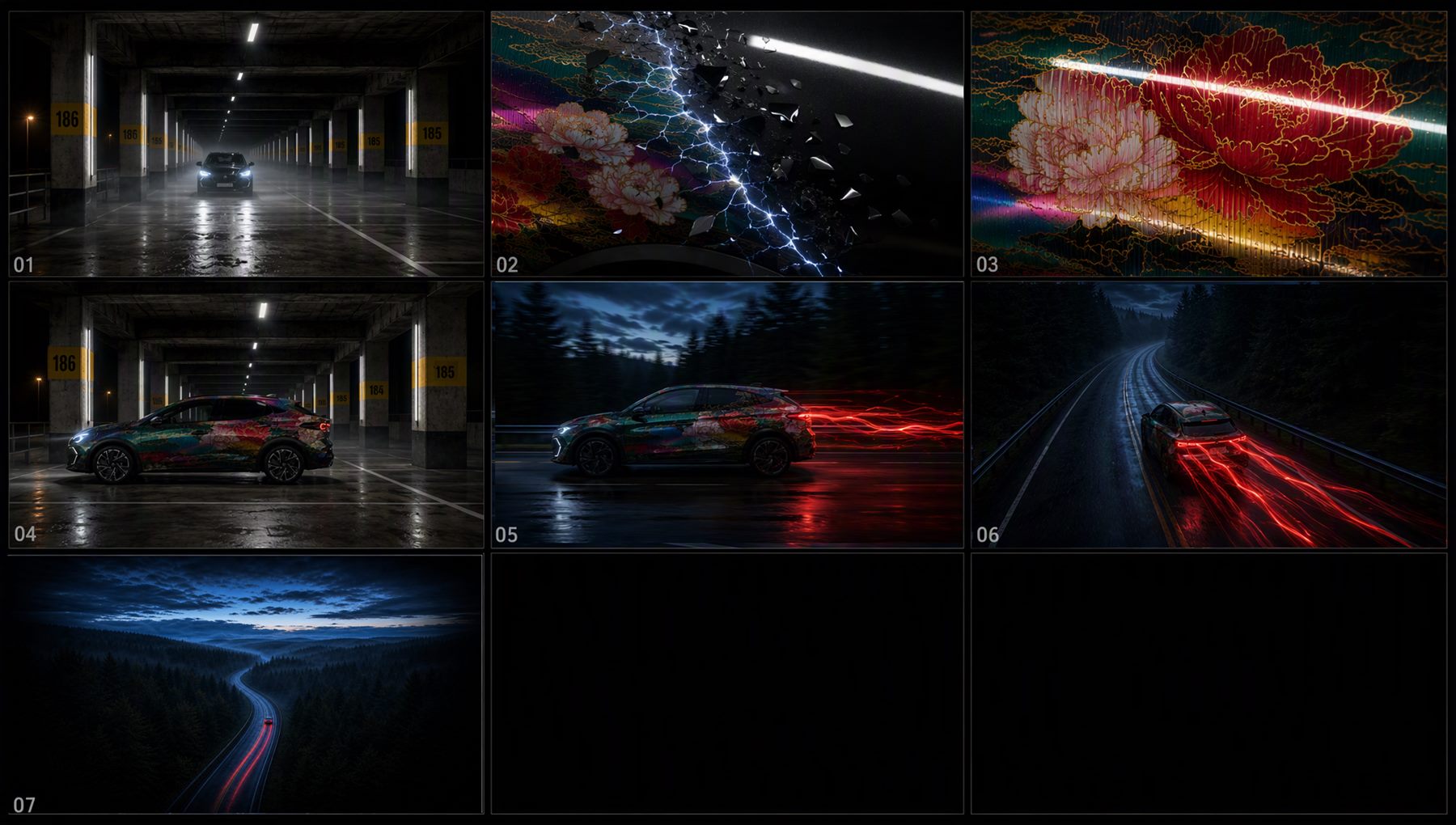
- 03Film storyboards built in the same pipeline, so approved boards match the finished frame
- 04A new wrap design is a generation run, not a reshoot
How it was built
Every frame in this campaign is composited from elements that were built once and reused. Each one is sheeted before a single frame is generated, which is the whole reason a face, a wardrobe and a wrap stay the same across four acts and two films.
Instagram reel series
9:16 vertical, four actsA vertical crop is unforgiving: it holds a face at close range and shows a garment from the knee up. So the reel library is built around turnarounds and props that survive that crop — the cast from four sides, the car from underneath, the tools in hand.
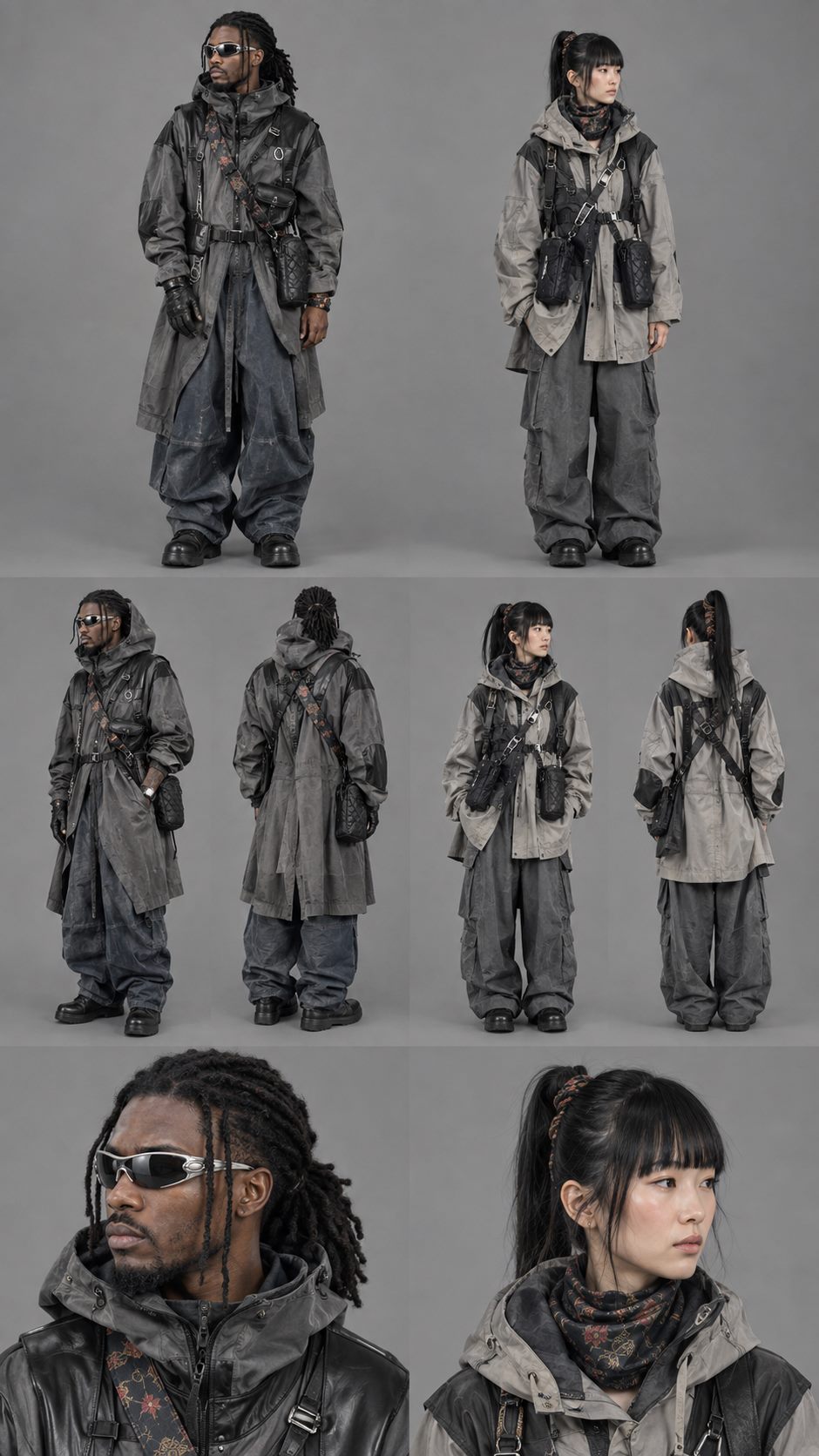
The cast, weathered palette
Two characters, each front, three-quarter and back, with a close-up for anything shot above the shoulder. Salvaged coats and harnesses in a grey, rained-on palette.
ACT II — WORN THROUGH THE CITY
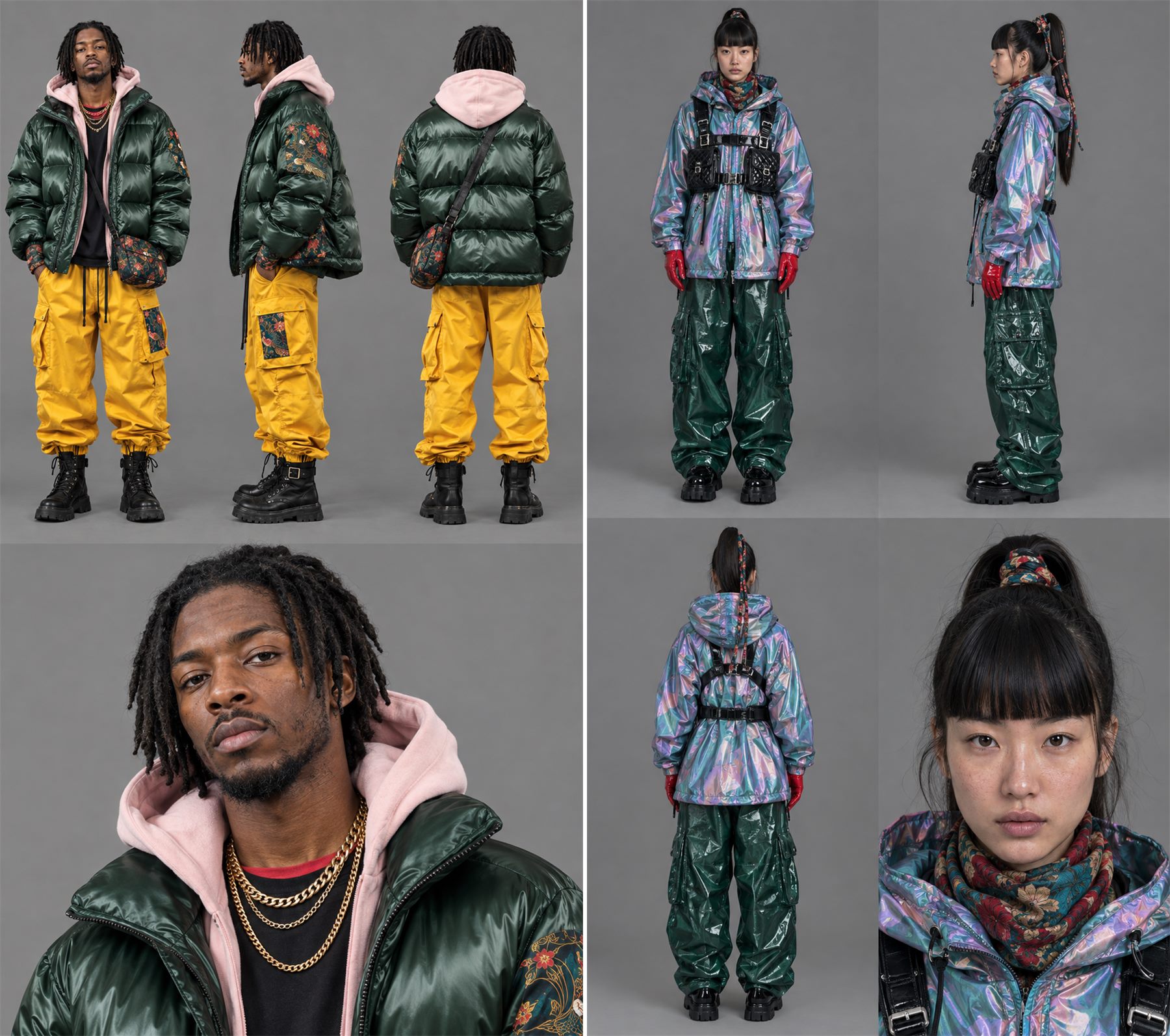
The cast, iridescent palette
The same construction in the second wardrobe — pearlescent shell, lacquered green cargos, red gloves. Building both palettes as full turnarounds is what lets an act change its look without changing its cast.
THE SECOND PALETTE
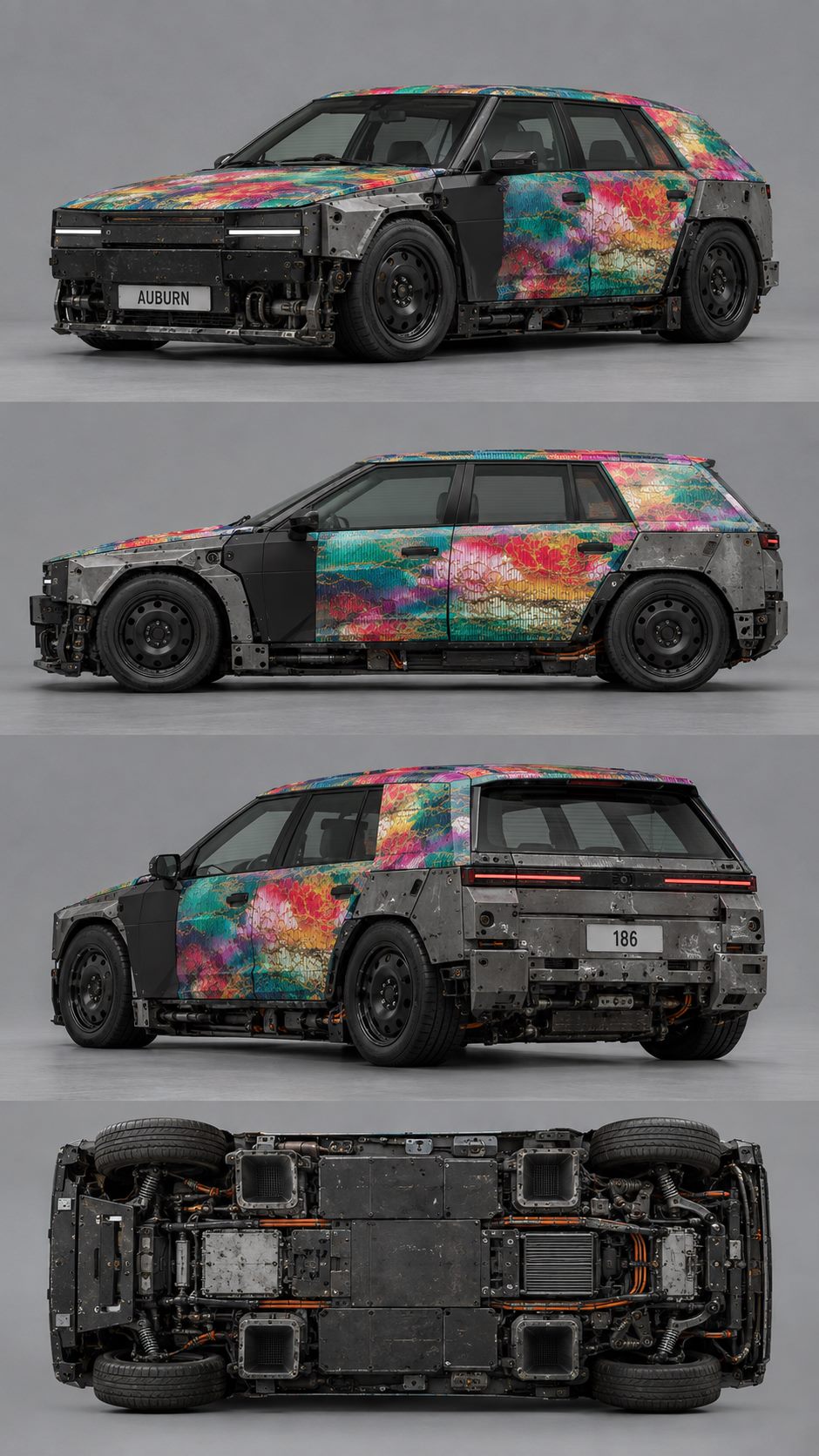
The car
Three-quarter, profile, rear three-quarter and underside. Half the body is raw panel and exposed structure, half is wrap — the state the campaign returns to whenever it needs to show what is underneath.
ALL FOUR ACTS
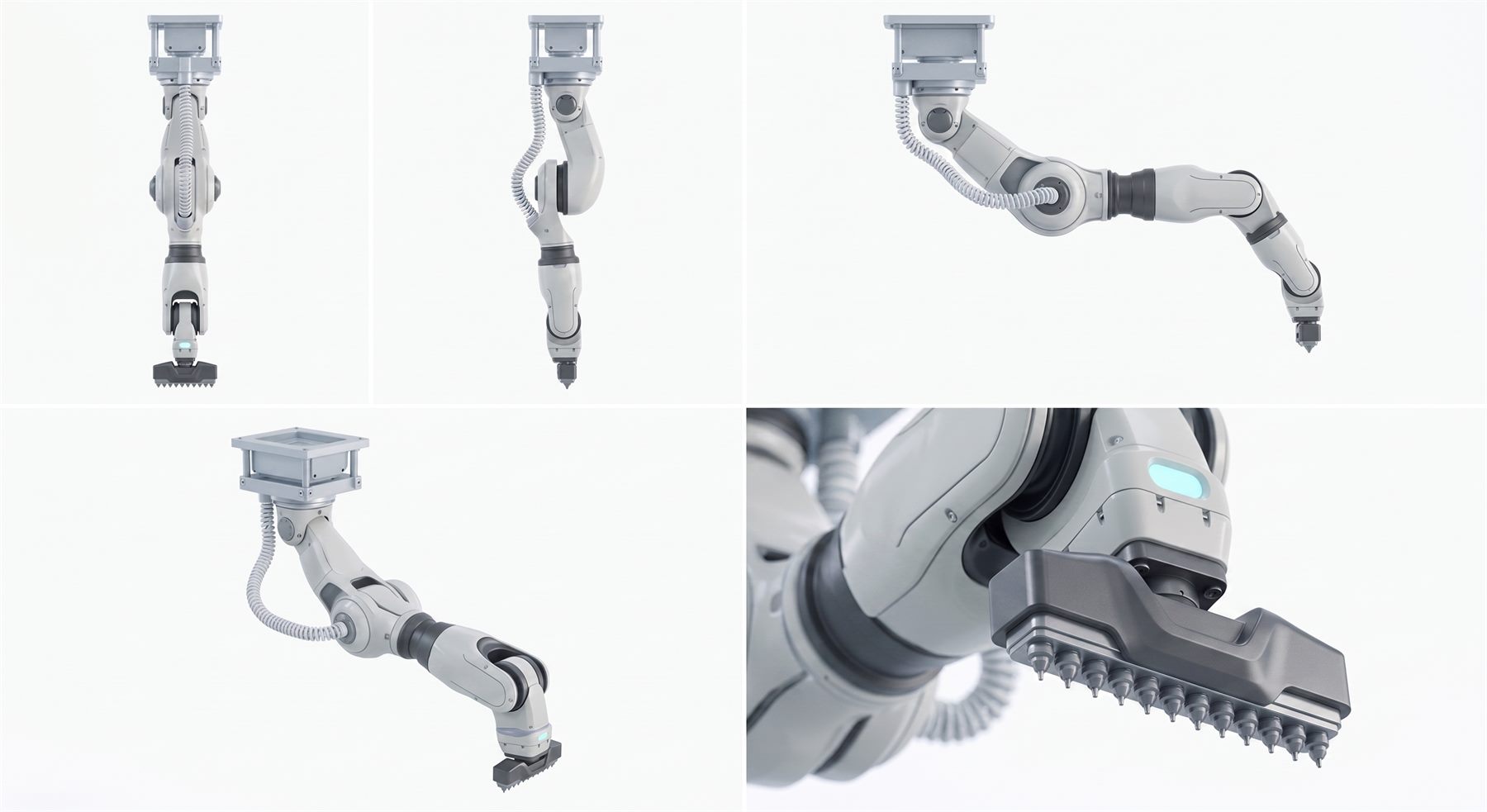
The applicator arm
Five views ending on the head itself, because the act closes on a macro of the roller and a machine that only reads at a distance is no use there.
ACT I — APPLIED BY MACHINE
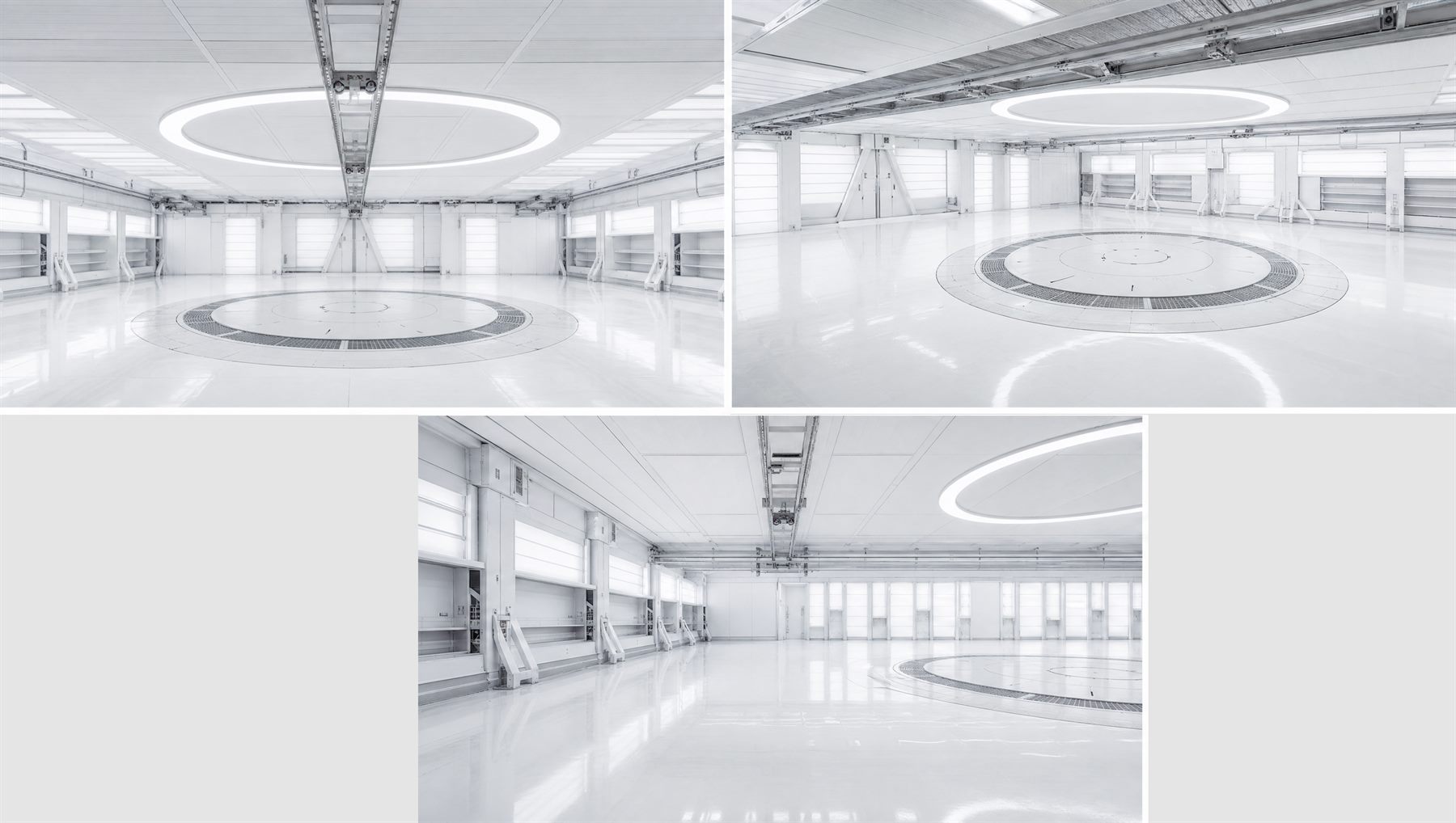
The application bay
The white room and its turntable, built empty from three angles. Sets are built without the vehicle so the same room can take any car the client sends.
ACT I — APPLIED BY MACHINE
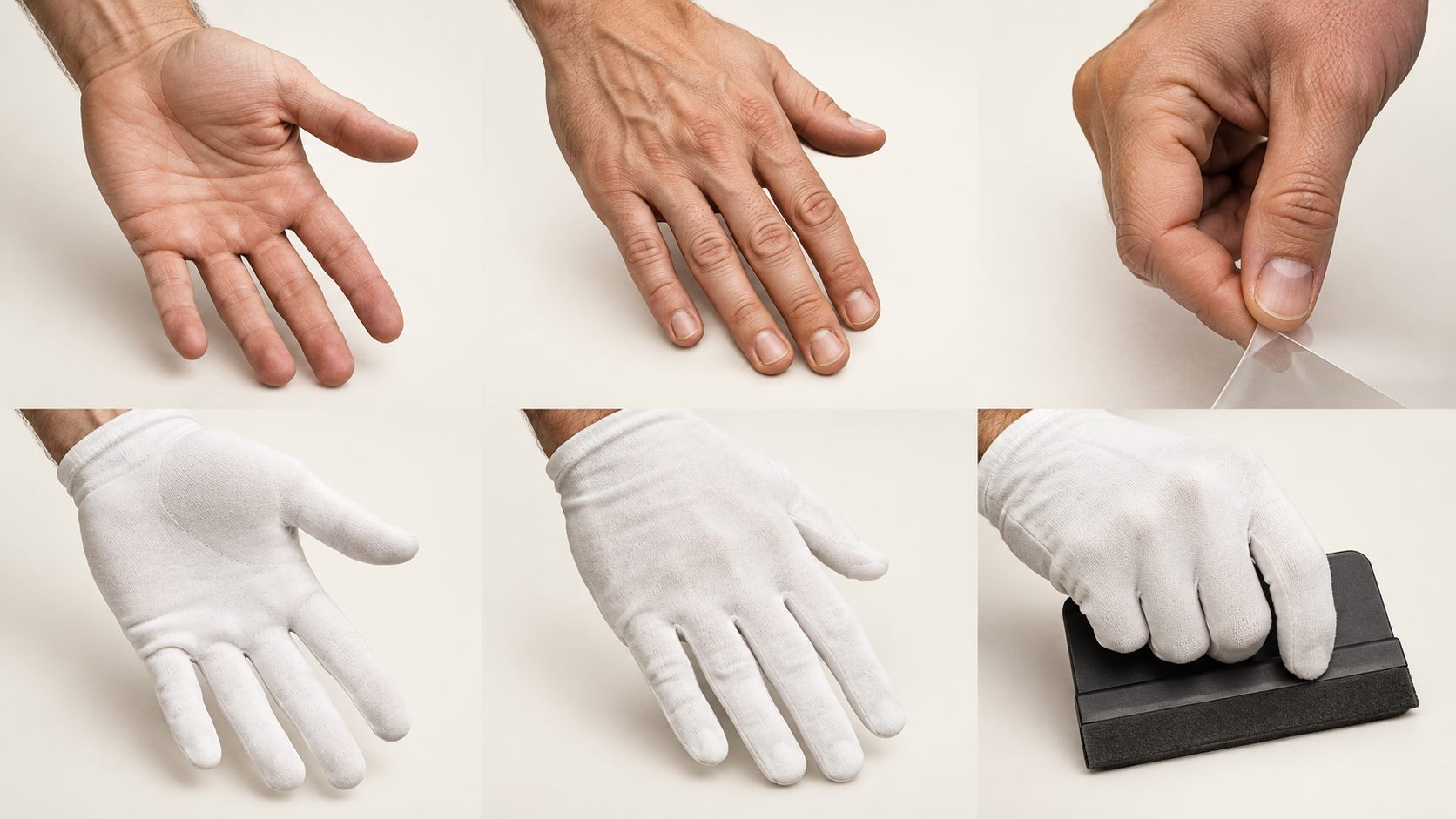
The hands
Bare and gloved, open and working, with film and squeegee. This is the act that keeps the campaign honest about what the client actually sells, so the hands had to be an element rather than a lucky frame.
THE HANDS — VINYL, SQUEEGEE, BLADE
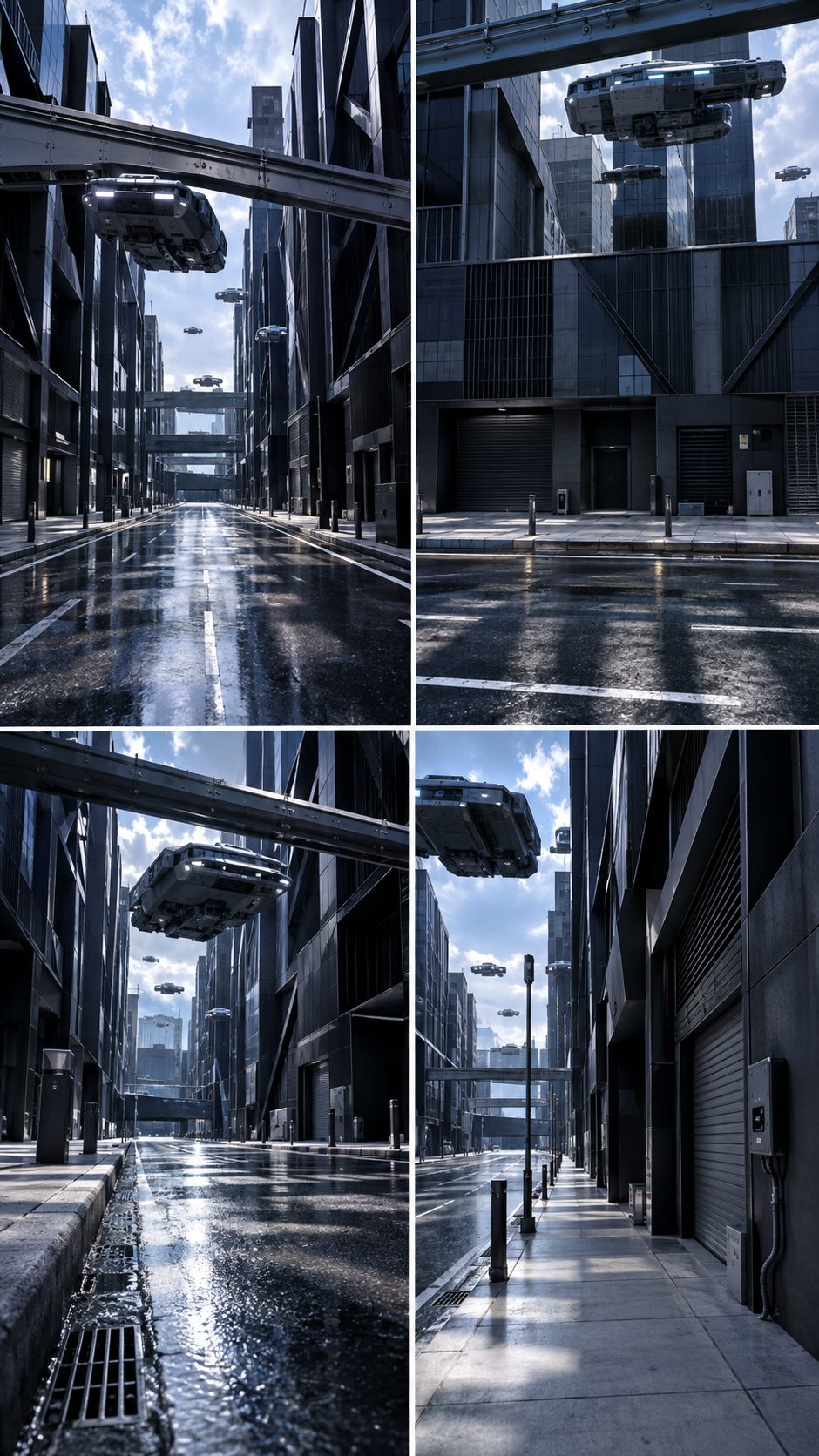
Main street
One street from four angles, wet, empty and back-lit, with the traffic running overhead. Numbered as a location so it can be called again in a later act.
ACT II — WORN THROUGH THE CITY
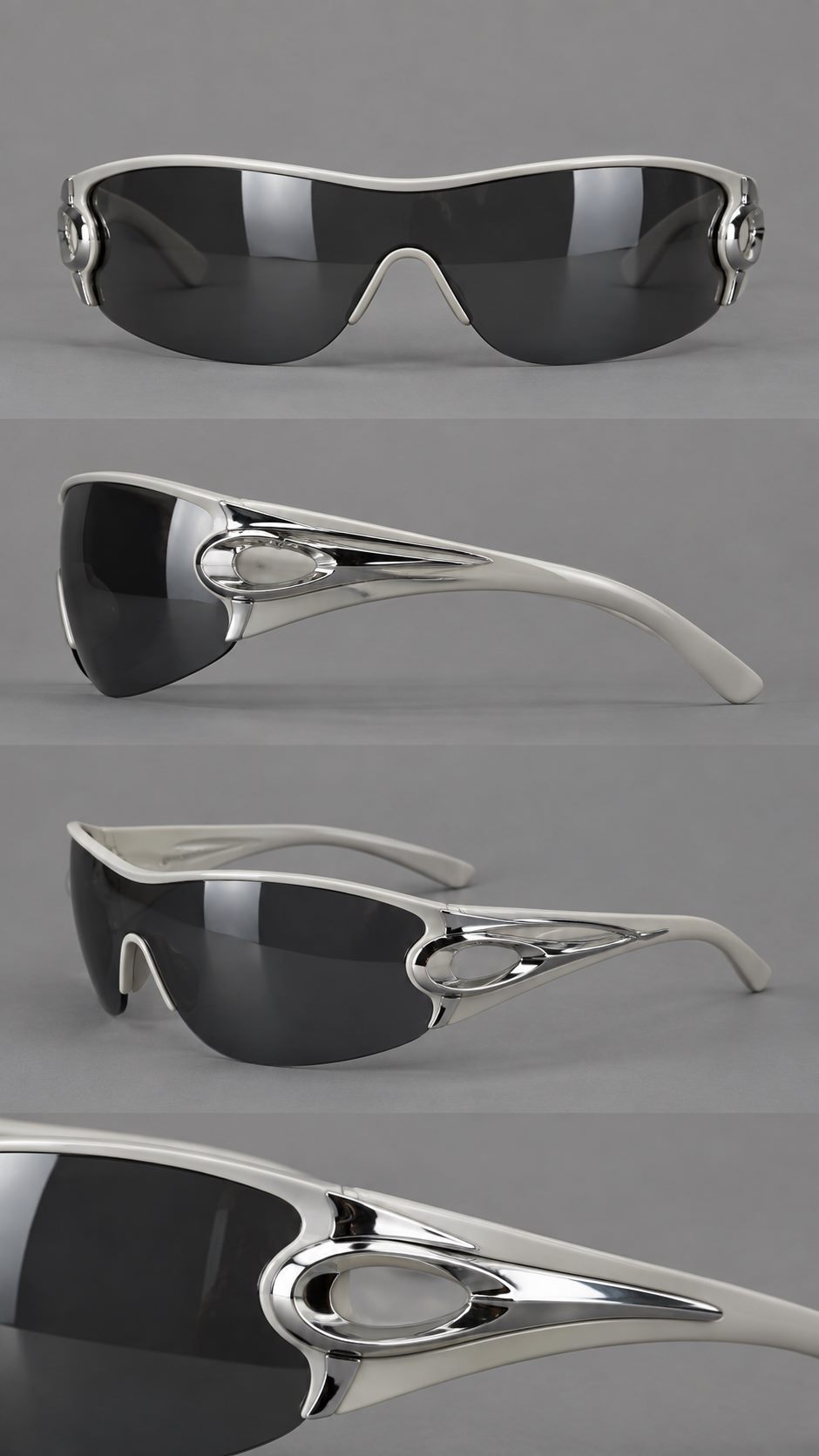
The eyewear
A prop sheeted in its own right. Anything that sits on a face in close-up has to be the same object every time it appears, or the cut does the noticing for the viewer.
PROP CONTINUITY
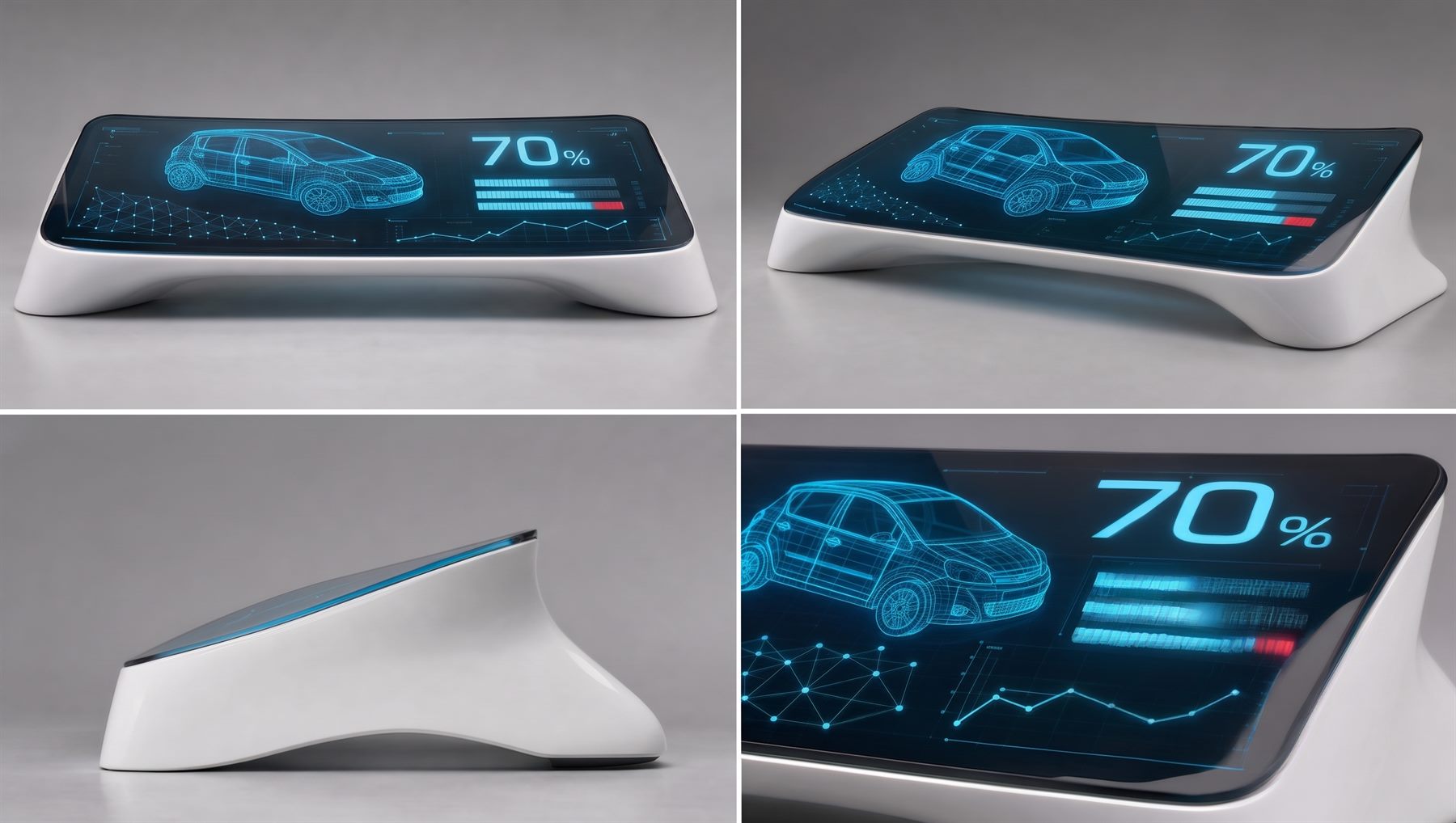
The console
The in-car display, four views including the screen at reading distance, so the interface is legible rather than implied.
PROP CONTINUITY
Long-form films
16:9, two filmsThe films need something different again: the vehicle as measured elevations, and every location built empty. Between them those two things are what let a car be driven through a set it was never photographed in.
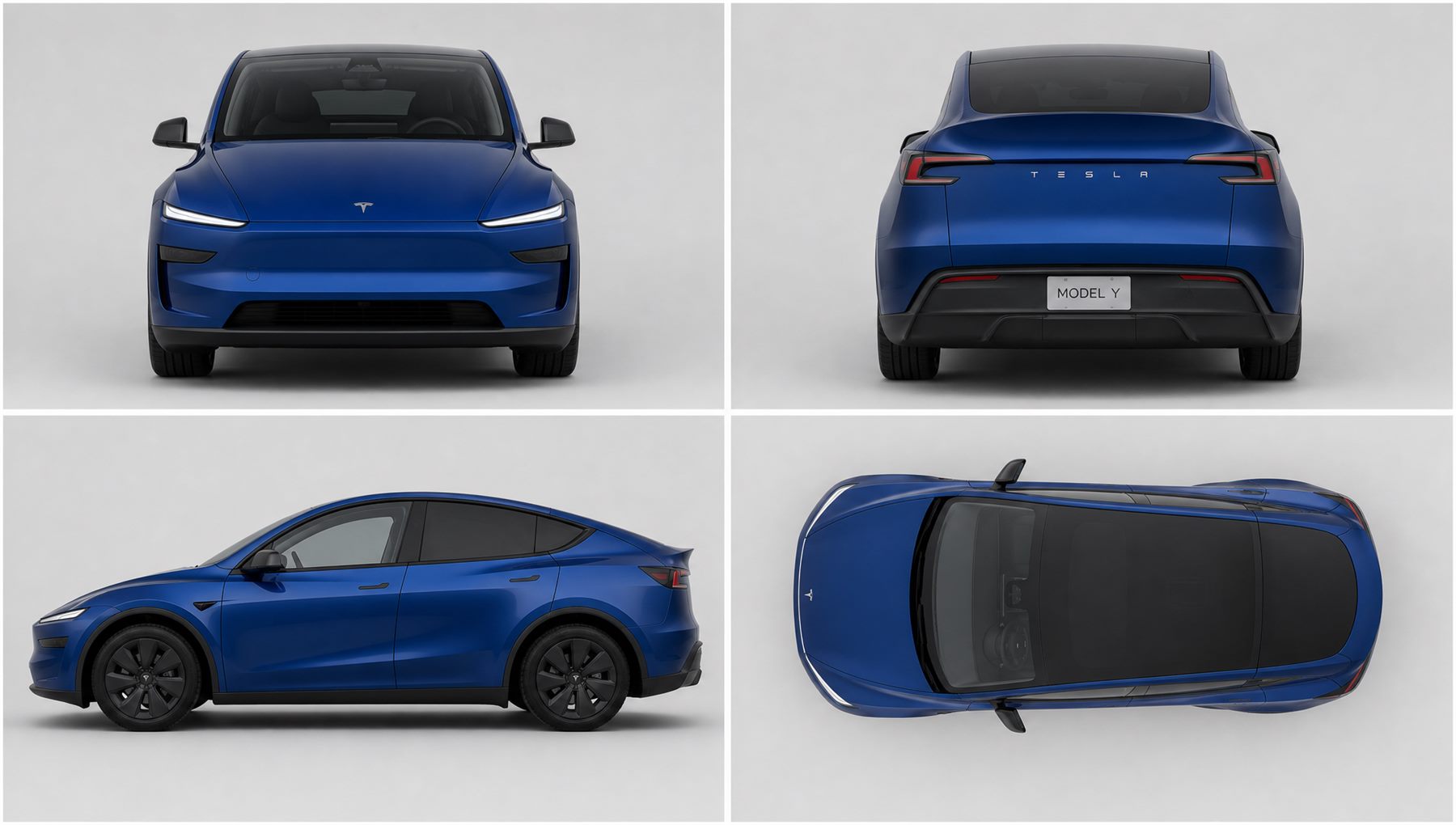
Film one — the vehicle
Four orthographic views, established once so the car is the same object from any angle the film asks for. It is also the paint state the film opens on.
PANELS 1-2 — APPROACH, ARC TO PROFILE
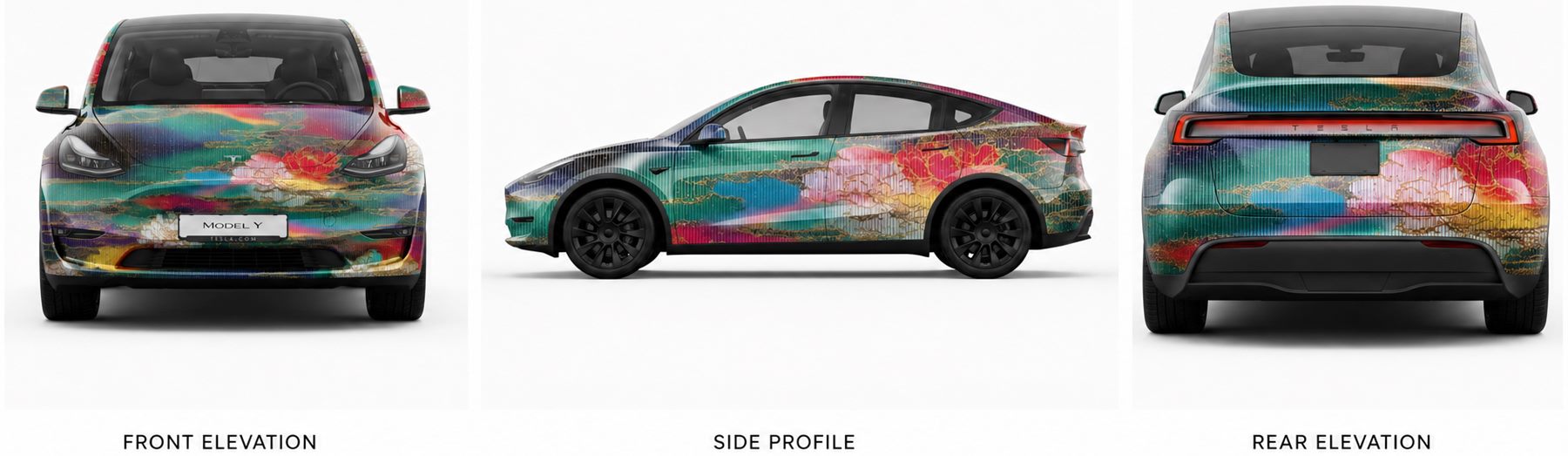
Film one — the wrap
The same body with the design applied, drawn as front, side and rear. Fixing the pattern to elevations is what keeps a petal in the same place on the door whether the shot is a macro or a drive-by.
PANELS 3-7, 10-11 — FRACTURE THROUGH OVERLOOK
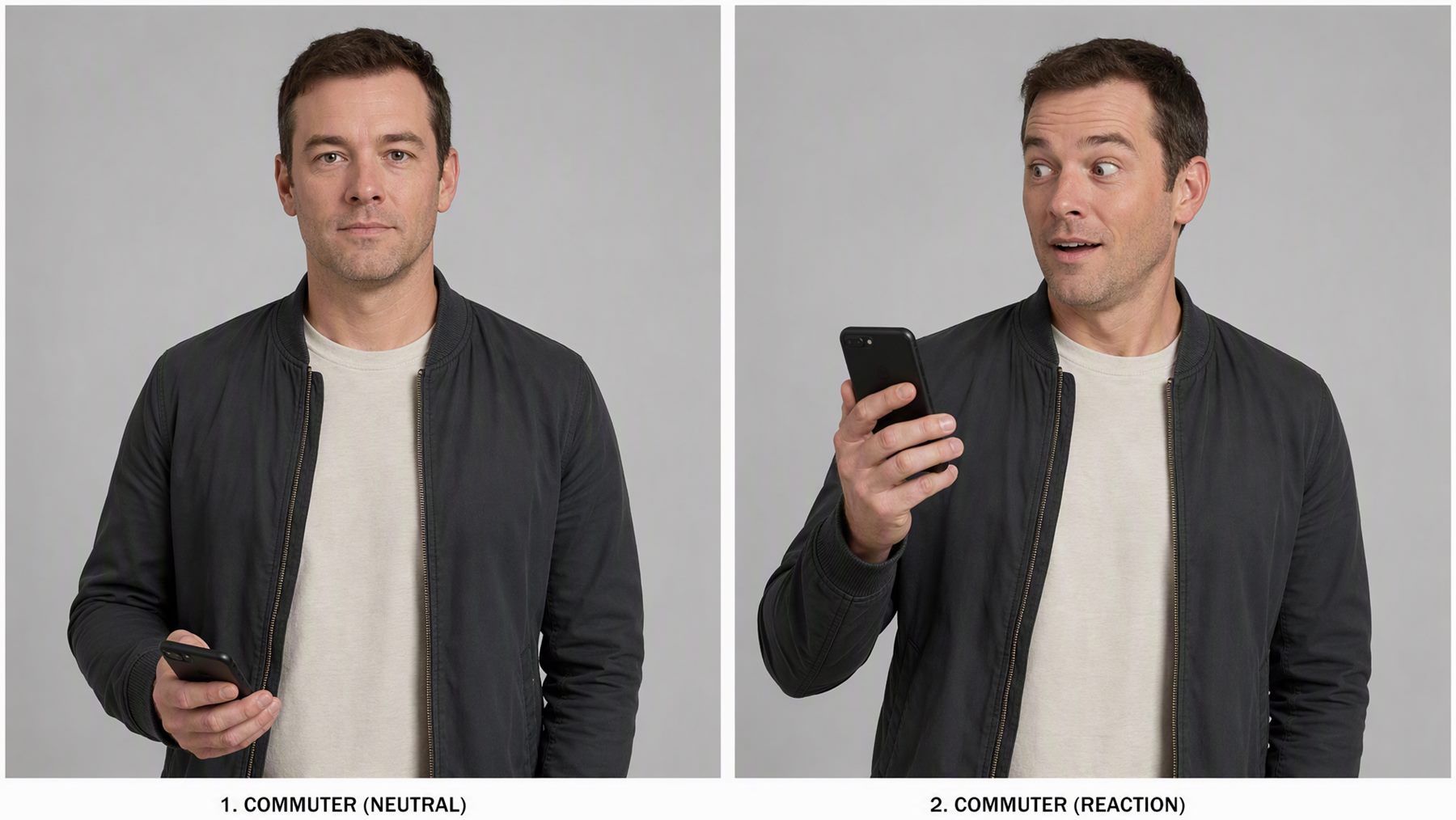
Film one — the cast
One commuter, built neutral and built reacting. Two states are enough: the film only ever needs him to notice something.
PANEL 9 — COMMUTER REACTION
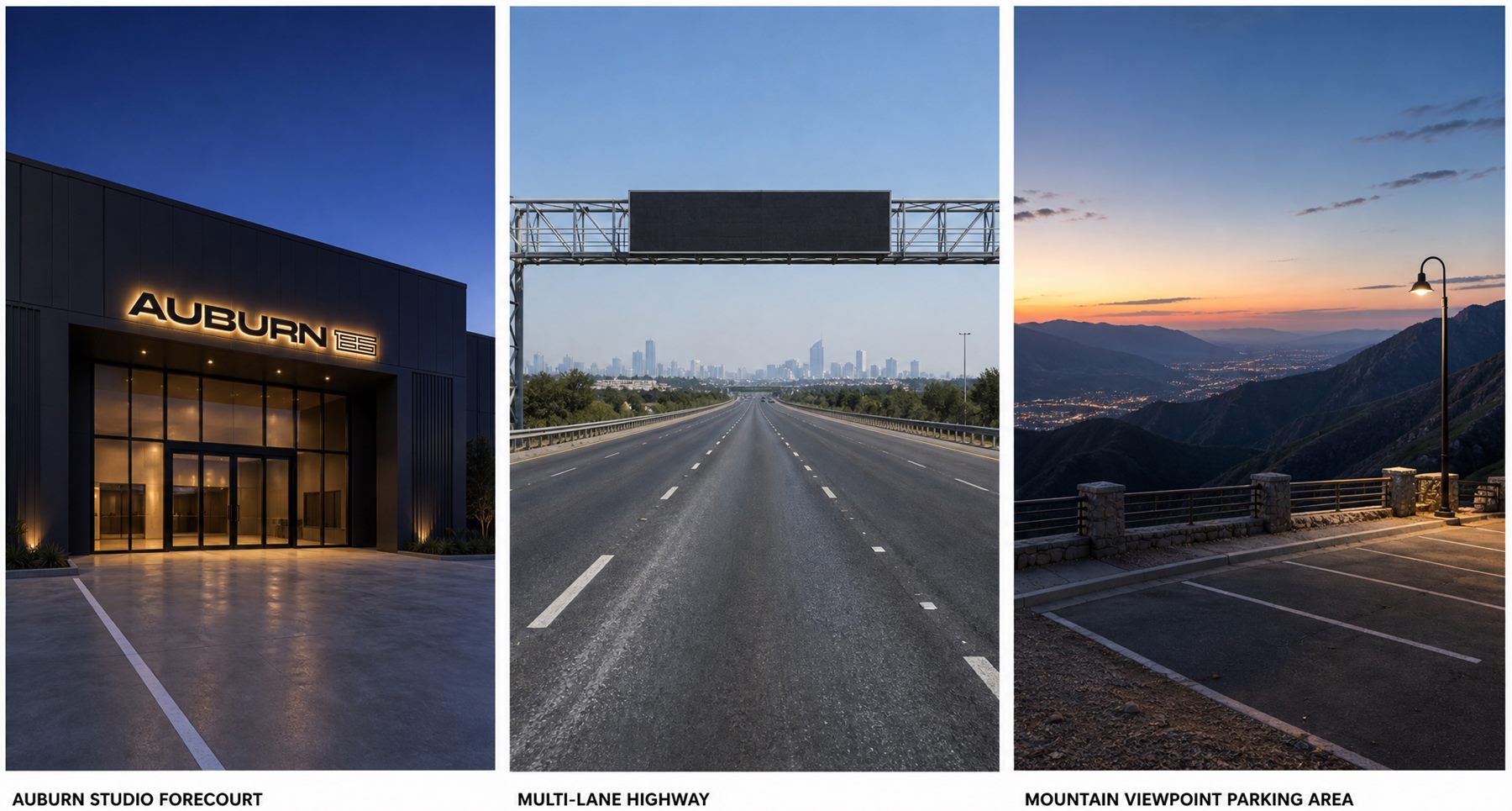
Film one — the locations
Three sets — the client's own forecourt at dusk, a multi-lane highway into the city, and a mountain overlook. Each built empty, then the vehicle placed into it.
PANELS 1-2, 7, 8, 11 — FORECOURT, HIGHWAY, OVERLOOK
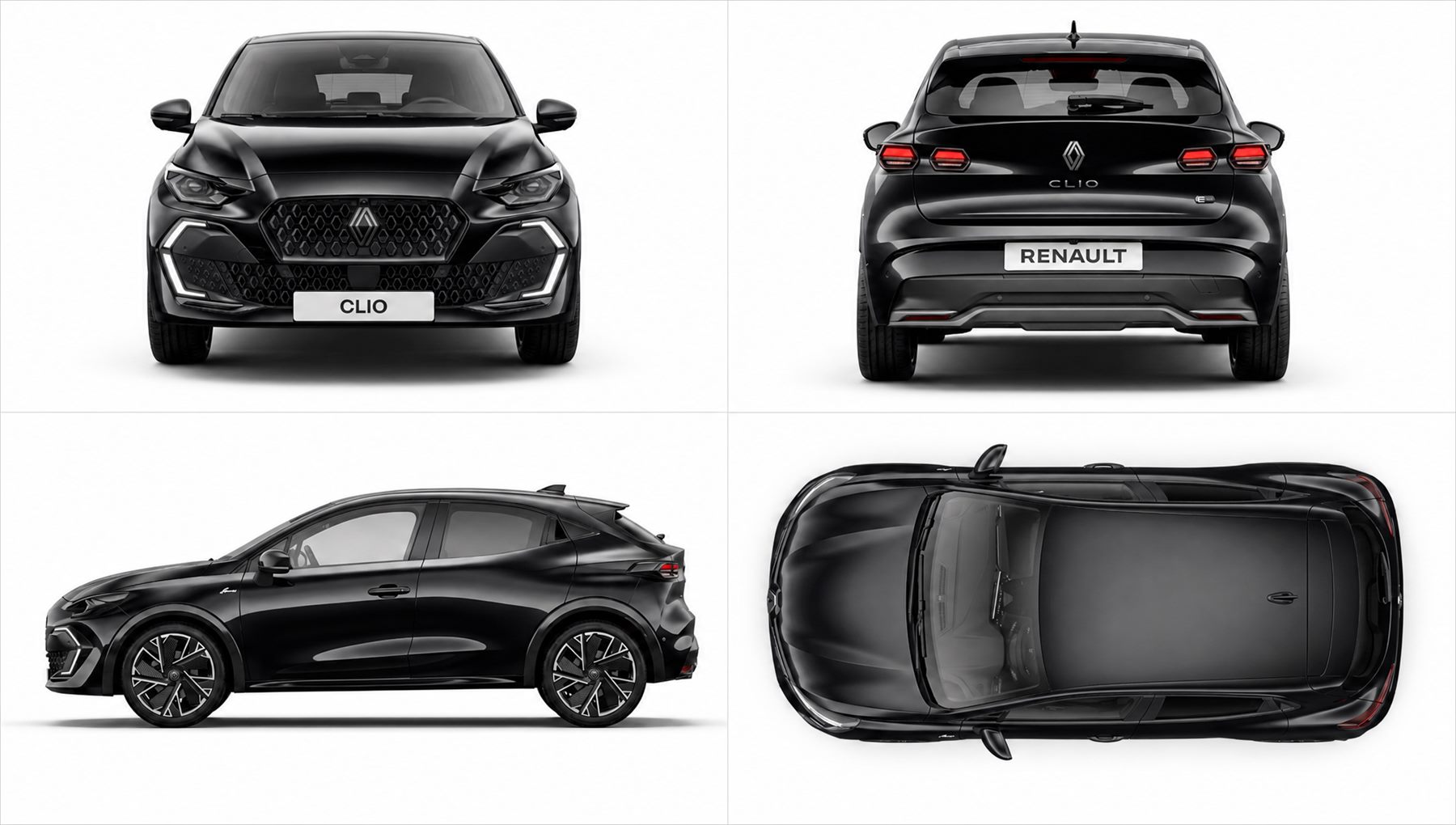
Film two — the vehicle
A second car, sheeted the same way. The library is per-vehicle, so adding a model to the campaign means adding four views, not rebuilding the pipeline.
THE GARAGE-TO-FOREST CUT
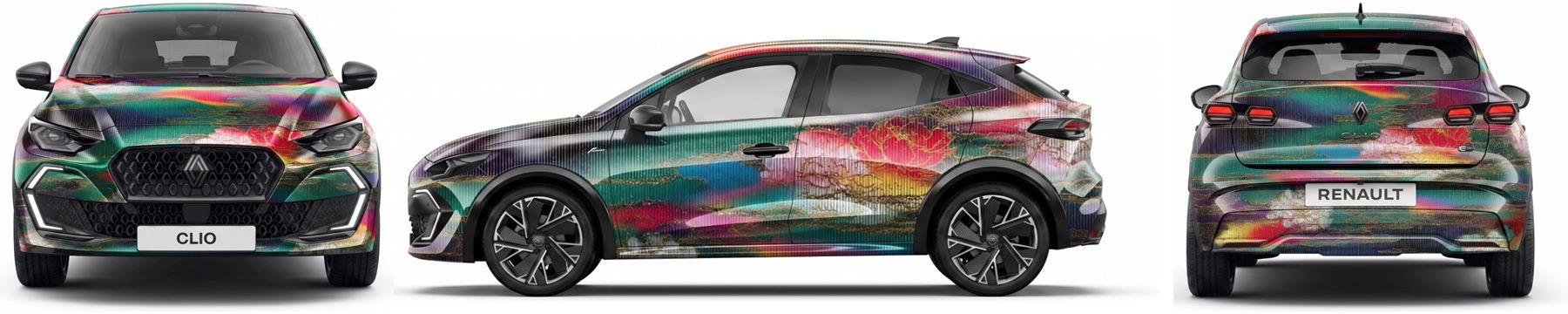
Film two — the wrap
The same design carried onto a different body. Holding one pattern across two shapes is the test of whether a wrap is a real design or a texture.
THE GARAGE-TO-FOREST CUT
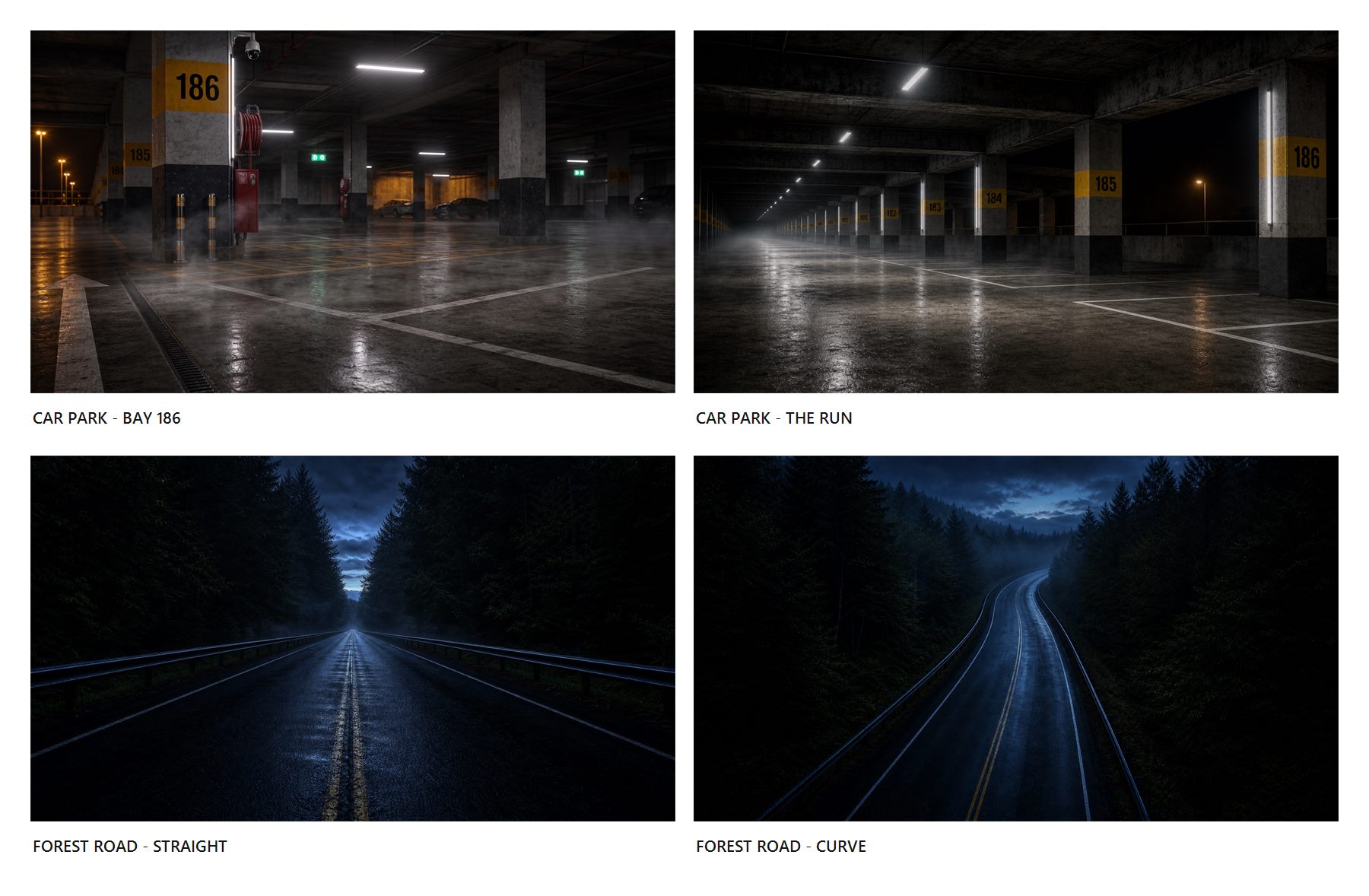
Film two — the locations
Two sets, two views each: a night car park down to the numbered bay, and a wet forest road straight and on the curve. Built empty, lit for headlights that are not there yet.
THE GARAGE-TO-FOREST CUT
Board to frame
Each film was boarded in the same pipeline that rendered it, so the panel a client approves is the frame they get.